
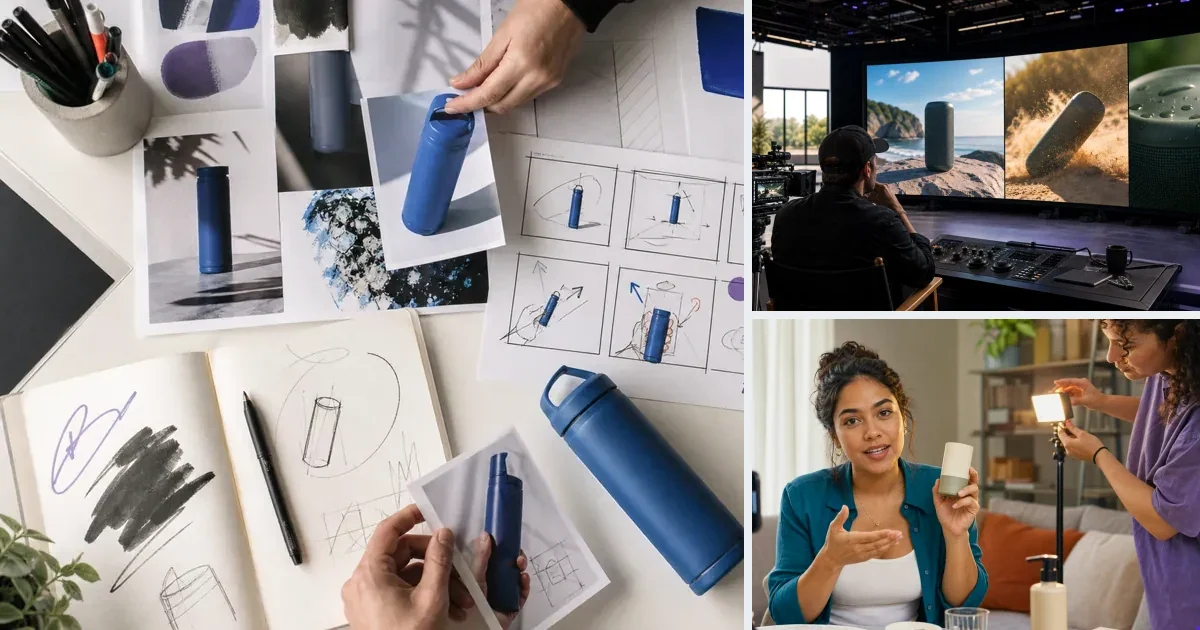
AI video generation is the use of generative models (Seedance, Kling, Veo, Wan and peers) to produce video directly from a text prompt, an image, or reference media — no camera, no crew, no editing timeline. For marketers in 2026 its practical sweet spot is short-form product and ad creative: 5–15 second vertical clips where testing volume matters more than cinematic length. A finished 8-second product ad costs a few dollars in compute (on v4v, ~$2.44 via Seedance 2.0), which changes the economics of creative testing more than it changes filmmaking.
How does it work, briefly?
A model trained on video learns the relationship between descriptions and moving images. You provide the conditioning — a prompt, a product photo, a reference clip — and it renders new frames consistent with it. Quality varies by model and job: some excel at realistic materials, others at stylized motion or lifestyle realism.
What is it good for today?
- Product video ads and UGC-style clips for TikTok/Reels/Meta
- Ad variant testing at volume (the biggest economic win)
- Animating product stills; localized versions of a proven ad
Where does it still fall short?
Long-form narrative, precise brand-asset control frame-by-frame, and complex human performance. For those, traditional production still earns its cost.
Paste a product link. The brief builds itself.
Generate product videos, UGC-style ads and hooks in about 5 minutes.
Try v4vFrom $7 · no subscription, ever · credits never expire
FAQs
Is AI-generated video allowed in ads?
Yes on major platforms, subject to their synthetic-media policies — disclose where required and avoid misleading claims.
What does an AI-generated ad cost?
On v4v: ~349 credits ≈ $2.44 for an 8-second Seedance 2.0 clip, pay-per-use.
Facts checked July 16, 2026. Competitor claims from public pricing pages; verify before relying on them.