Real creators are expensive, slow, and unavailable at 2am when you need to test a new ad angle. That's why more DTC brands are turning to AI influencer video to close the gap between the creative they need and the budget they actually have.
This isn't about replacing human creativity. It's about removing the production bottleneck that stops most small brands from testing enough creative to compete on Meta and TikTok.
Here's what's actually working, how the technology works, and what you need to know before building virtual creator content into your paid ad strategy.
What Is AI Influencer Video?
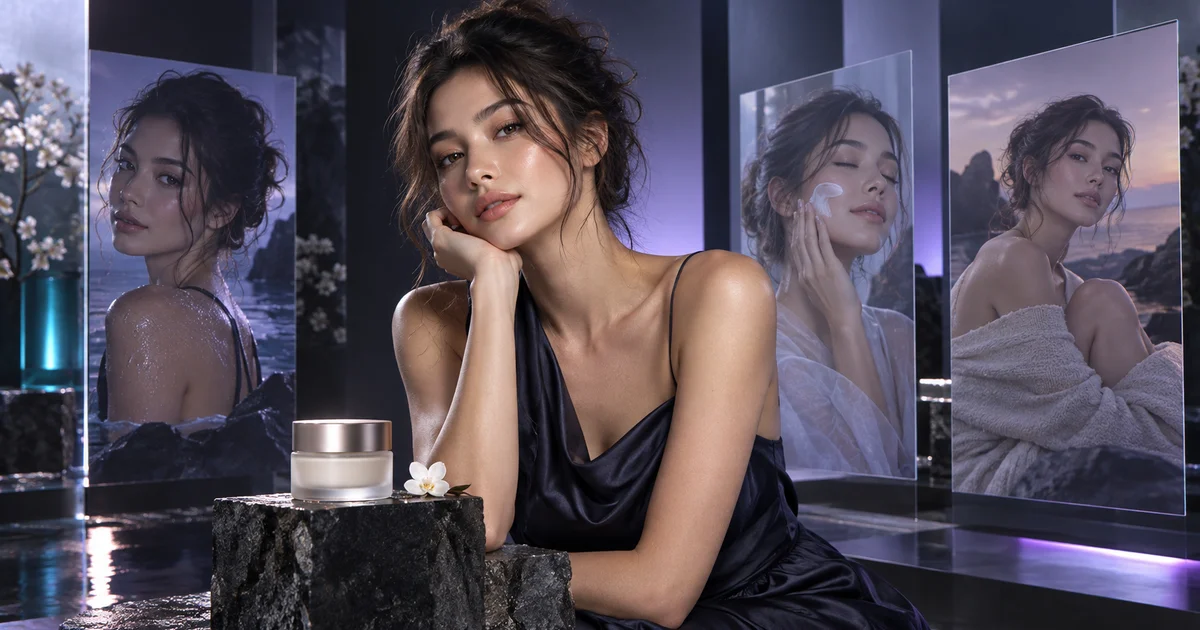
AI influencer video is video content featuring synthetic or AI-generated presenters, avatars, or virtual creator personas delivering product messaging directly to camera. The output looks and feels like UGC or creator content — but no human was filmed.
The format typically includes:
- A talking-head avatar delivering a script or product pitch
- Lip-synced audio from text-to-voice or cloned voice models
- Product visuals, b-roll, and branded overlays edited around the presenter
- A vertical 9:16 format built for TikTok, Reels, and Meta feed
For paid ads, the appeal is volume and speed. You can produce five variations of the same concept in an afternoon, test them against each other, and cut the losers before a human creator would have even replied to your brief.
Why Brands Are Adopting This Format for Paid Social
The economics of paid social have shifted. Rising CPMs on Meta and TikTok mean that brands running static creative or a single video are burning budget on a format that fatigues fast. The brands winning right now are testing more creative, more often.
Human UGC production has a hard ceiling. A reliable creator takes days to brief, film, and deliver. Revisions add more time. Creator fees vary with scope, usage rights and revisions. Request a quote that includes those costs before comparing a creator brief with an AI workflow.
AI influencer video removes those constraints. The production cycle compresses from days to minutes. Cost per video drops significantly. And because you control the avatar, script, and style entirely, you're not dependent on a creator's availability, mood, or aesthetic preferences.
For performance marketers, this is primarily a testing and volume play — not a brand-building one.
How the Technology Actually Works
AI Avatars and Lip Sync
Modern avatar models generate photorealistic presenters that speak in sync with generated or recorded audio. v4v.ai uses Kling AI Avatar with lip sync, which maps audio output to realistic facial movement — producing a presenter that holds up in a fast-scrolling feed.
The quality gap between early avatar video and current models is significant. Today's outputs handle eye movement, micro-expressions, and natural head positioning in ways that weren't possible even two years ago. That matters for paid ads because viewer trust drops sharply when an avatar looks off.
Text-to-Voice and Audio Generation
Voiceover is handled by text-to-voice models that produce natural-sounding speech from a written script. Paired with music generation tools like Suno, the full audio layer of a video ad can be assembled without recording anything.
Some platforms also support video translation — take a finished AI influencer video and re-render it in a different language with matching lip sync. Useful if you're running ads across multiple markets.
Product-to-Video Pipelines
The most practical application for DTC brands is a product-to-video pipeline: paste in a product URL and the platform generates the ad. v4v's product video ad generator scrapes product data from the URL, builds a creative brief, and attaches avatars and assets to produce a finished vertical video — no script required.
This is where the biggest time cost disappears for solo operators. No copy to write, no creator to direct, no footage to edit. The pipeline handles the brief-to-output process end to end.
What Makes AI Influencer Video Work in Paid Ads
Not all AI influencer video performs equally. The format works best when a few conditions are met.
The hook is specific. Generic presenter-to-camera ads perform poorly whether the presenter is human or AI. The first two seconds need a specific claim, visual, or statement that matches what your target audience is already thinking. AI production doesn't fix a weak creative strategy.
The avatar fits the product context. A wellness supplement ad and a B2B software demo need different presenter styles, tones, and visual environments. Most platforms offer multiple avatar options — match the persona to the product category.
The format is native. Vertical 9:16 video looks native on TikTok and Reels. Horizontal video repurposed for mobile reads as an ad immediately. If you're producing AI influencer content for paid social, output it in the format the platform expects.
You're testing multiple variations. The real advantage of AI video production is volume. One video and done means you're not using the format correctly. Produce three to five versions with different hooks, different avatars, or different product angles, and let the data tell you what works.
The Workflow: From Product URL to Live Ad
Here's a practical production sequence for a DTC brand using AI influencer video for paid ads.
-
Input your product URL. v4v.ai scrapes your product page automatically, pulling the product name, description, benefits, and visual assets.
-
Review the automated brief. The platform generates a creative direction based on the scraped data. Adjust the tone, angle, or emphasis before generating.
-
Select an avatar and style. Choose a presenter persona that fits your product category. Set the voice, language, and visual treatment.
-
Generate the video. The platform renders a 9:16 vertical video with the avatar, voiceover, product visuals, and music combined. An illustrative workflow quote of 349 credits costs about $2.44 at the entry pack rate.
-
Download and upload to your ad account. The output is ready for Meta Ads Manager or TikTok Ads without additional editing.
-
Build a reusable workflow. If you're producing ads regularly, v4v's Workflows Explorer lets you turn this sequence into a repeatable pipeline — one prompt triggers the full production process.
What to Watch Out For
AI influencer video has real limitations worth understanding before you commit budget to it.
Avatar fatigue is real. Run the same AI presenter across dozens of ads and audiences start recognizing the face. Rotate avatars and styles regularly, the same way you would with human creators.
Compliance varies by platform. Meta and TikTok have disclosure requirements for AI-generated content that are actively evolving. Check current platform policies before running AI influencer ads at scale — disclosure labels are increasingly required and enforced.
It doesn't replace creative strategy. AI video production removes production friction. It doesn't generate insight. You still need to understand your audience, your product's strongest claim, and what kind of content performs in your category.
Cost structures vary across platforms. Some tools use subscription models with credit limits and expiry dates, which makes actual per-video costs hard to predict. v4v runs on a pay-per-use model — no subscription, no expiring credits. You buy what you need and use it when you need it. Pricing is transparent at v4v.ai/prices.
Who This Format Is Best Suited For
AI influencer video for paid ads makes the most sense for:
- Solo DTC operators who need a steady supply of video creative but can't afford a production budget or creator retainer
- Performance marketers running creative testing at volume across multiple e-commerce clients
- Brands entering new markets who need localized video content in multiple languages without re-filming
- Early-stage brands validating ad angles before investing in professional production
It's less suited for brand campaigns that require genuine human authenticity, or for organic social where the creator relationship itself is the point.
Paste a product link. The brief builds itself.
Generate product videos, UGC-style ads and hooks with a guided workflow.
Try v4vFrom $7 · no subscription, ever · credits never expire
Pricing example: 349 × $0.007 = $2.44 at the $7 credit pack. This is illustrative, not a fixed model or finished-ad price. Model, duration, resolution, input media and additional workflow steps affect the live quote. Repeated attempts add cost. See current pricing.
Review Synthetic Content Before Publishing
Use licensed assets and consented voices or likenesses. Do not present a fictional presenter as a real customer giving a testimonial. TikTok requires disclosures for AI-generated or substantially AI-modified ad media; follow its official ad disclaimer guidance and check the destination platform before each campaign.
FAQs
What is AI influencer video?
AI influencer video is video content featuring AI-generated avatars or virtual presenters delivering product messaging. It mimics the format of creator or UGC content but is produced entirely with AI tools — no human creator filmed.
Can AI influencer videos run as paid ads on Meta and TikTok?
Yes. AI-generated video ads can run on both platforms, but Meta and TikTok have disclosure requirements for AI-generated content that are actively evolving. Review each platform's current ad policies before launching campaigns.
How much does it cost to produce an AI influencer video?
Costs vary by platform and model. On v4v.ai, an illustrative workflow quote of 349 credits costs about $2.44 at the entry pack rate. No subscription required.
Do I need to write a script to create an AI influencer video?
Not with every platform. v4v.ai accepts a product URL as input and generates the creative brief and video automatically, without requiring a script upfront.
How do AI avatars handle lip sync?
Current avatar models use audio-driven facial animation to match mouth movement, expression, and head position to the generated voiceover. v4v uses Kling AI Avatar with lip sync for this layer.
How many variations should I produce for paid ad testing?
Most performance marketers recommend at least three to five creative variations per concept, with different hooks or angles. AI video production makes this practical because the cost and time per variation are low.
Is AI influencer video the same as deepfake content?
No. AI influencer video uses purpose-built avatar and synthesis tools to create fictional virtual presenters for advertising. Deepfakes involve replacing a real person's likeness without consent. Reputable AI video platforms generate original synthetic personas — not replicas of real individuals.