
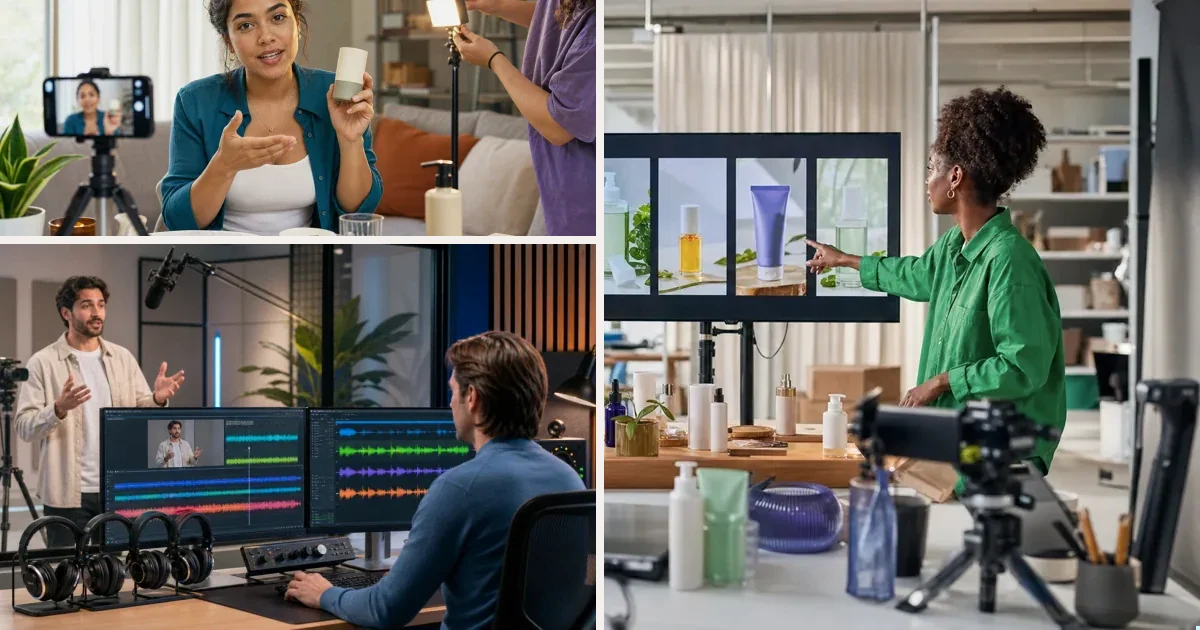
UGC ad creative is advertising deliberately styled like authentic user-generated content — handheld feel, creator cadence, real-environment settings — instead of studio polish. It converts because it reads as peer proof: 79% of consumers say UGC-style content highly impacts purchase decisions, and feed-native ads routinely outperform polished spots on hook rate. The traditional cost was creators: $50–$500 per video and a briefing cycle. AI generation replaced most of that — an avatar-fronted, UGC-styled product ad now renders in minutes for a few dollars, which is why the format's economics, not its aesthetics, changed in 2026.
What makes an ad "UGC-style"?
- A person (or avatar) talking to camera, creator cadence, casual language
- Real-context settings: bathroom shelf, kitchen counter, car seat
- Native format signals: 9:16, captions, quick cuts, first-person claims
- Deliberately less polish — authenticity is the aesthetic
Honest limits
UGC-style ≠ actual customer testimonials. Real reviews and creator posts carry social proof AI can't fake — the pragmatic stack is AI-generated UGC-style ads for volume, plus genuine customer content where you have it.
Paste a product link. The brief builds itself.
Generate product videos, UGC-style ads and hooks in about 5 minutes.
Try v4vFrom $7 · no subscription, ever · credits never expire
FAQs
Does AI UGC work as well as human UGC?
For paid-social hook-and-demo formats, often comparably at far lower cost; for trust-building organic content, real customers still win. (Full comparison coming: AI UGC vs human UGC.)
How much does an AI UGC ad cost?
On v4v, ~$2.44 per 8-second video, pay-per-use — vs $50–$500 per creator video.
Facts checked July 16, 2026. Competitor claims from public pricing pages; verify before relying on them.