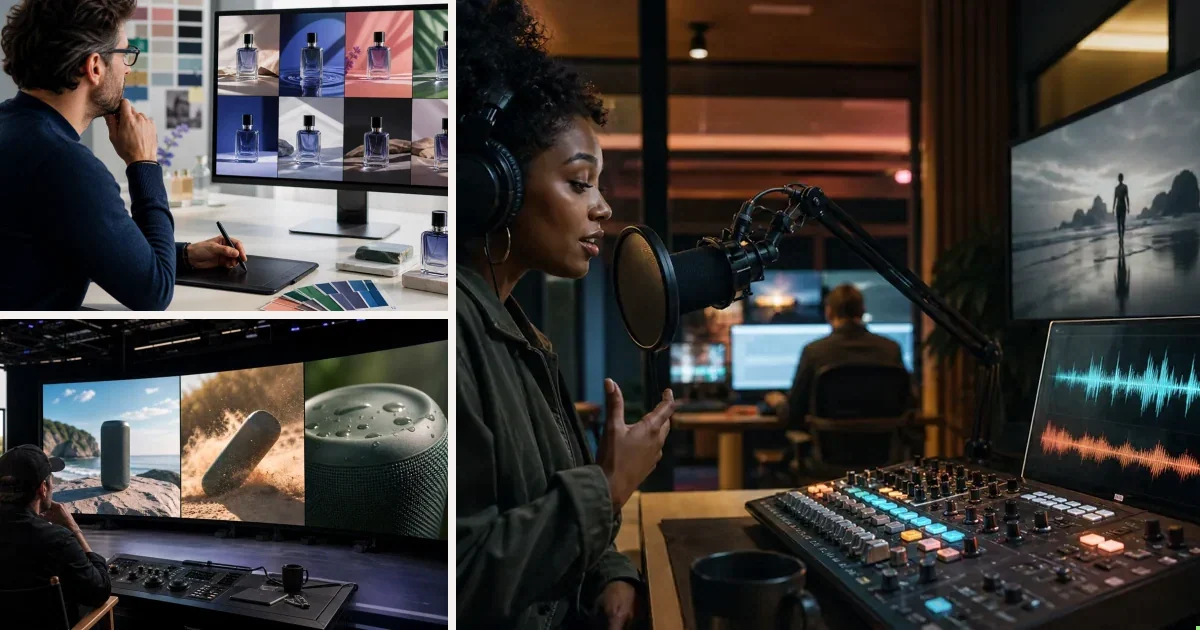
Not rivals — stages. GPT-image-2 is the generator: new compositions, recomposed angles, 9:16-friendly framings, consistent campaign backgrounds — when you need an image that doesn't exist yet. Nano-banana 2 is the editor: targeted changes to an existing image — background swaps, clutter removal, vertical recomposition — with the product preserved exactly. The production pattern uses both in order: generate or fix the input image cheaply, then spend video credits animating it. Images are the cheapest place to fix quality; a $0.10-scale edit beats regenerating a $2.44 video because the source frame was cluttered.
Choose by job
| Job | Use |
|---|---|
| No usable product shot at the right angle | GPT-image-2 |
| PDP photo is right but background is wrong | Nano-banana 2 |
| Campaign-consistent backgrounds across SKUs | GPT-image-2 |
| Remove marketplace clutter / recompose to 9:16 | Nano-banana 2 |
| Seasonal variant of an existing hero image | Either — edit if the base is good |
The preservation rule
Both must keep the product honest — exact shape, color, materials. Prompts should state what stays ("keep the sneaker exactly as is") before what changes. Review before animating; errors compound downstream.
Paste a product link. The brief builds itself.
Generate product videos, UGC-style ads and hooks in about 5 minutes.
Try v4vFrom $7 · no subscription, ever · credits never expire
FAQs
Which is cheaper?
Both cost a small fraction of a video generation — iterate freely at the image stage.
Can I skip images and go straight to video?
The URL flow does it for you when your PDP photos are good; fix or generate first when they're not.
Facts checked July 16, 2026. Competitor claims from public pricing pages; verify before relying on them.