
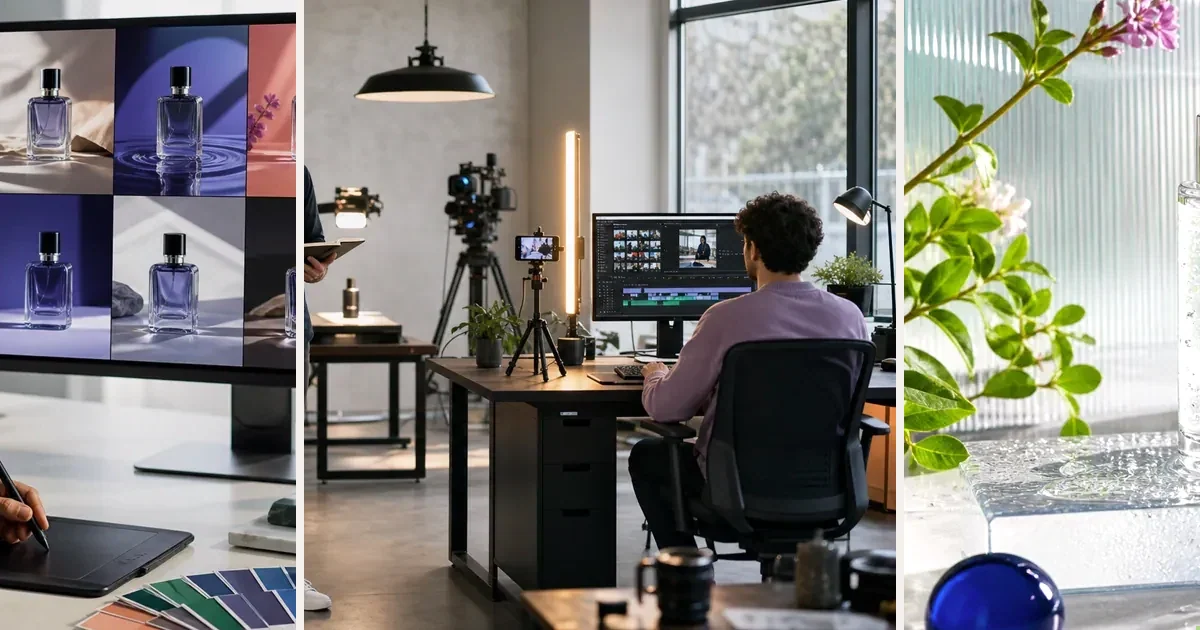
Product photography is usually the first bottleneck in ad production: PDP images have the wrong angles, wrong aspect ratio, and compositions built for a catalog, not a 9:16 ad. GPT-image-2 inside v4v generates ad-ready product images — the shots your video generation actually needs as inputs — for a fraction of a video's credit cost (image generations sit well below the ~349-credit video threshold, so generating several variants and picking the best is standard practice). Output feeds directly into the ecommerce pipeline: better input frames, better ads.
What do you use it for?
- Generating clean hero shots when the product page only has cluttered ones
- Recomposing for vertical: 9:16-friendly framing without crop damage
- Consistent backgrounds across a multi-SKU campaign
- Seasonal/context variants (same product, new setting) without a reshoot
How it fits the pipeline
- Product URL import pulls existing images
- GPT-image-2 generates or recomposes the shots the brief needs
- Video models (Seedance/Kling/Veo/Wan) animate from those frames
- Output: 9:16 ad with the product actually framed for the format
Cost logic
Pay-per-use credits, fixed transparent per-generation pricing — no quality tiers or hidden limits. Images cost a small fraction of a video generation, so iterate freely at the image stage; it's the cheapest place to fix quality.
Paste a product link. The brief builds itself.
Generate product videos, UGC-style ads and hooks in about 5 minutes.
Try v4vFrom $7 · no subscription, ever · credits never expire
FAQs
GPT-image-2 vs Nano-banana 2 — which one?
GPT-image-2 for generation and recomposition; Nano-banana 2 leans editing — targeted changes to an existing image. Both run in the Lab; see the shootout (coming next batch).
Can I use the images outside video ads?
Yes — download and use them as static creatives or PDP images too.
Facts checked July 16, 2026. Competitor claims from public pricing pages; verify before relying on them.