
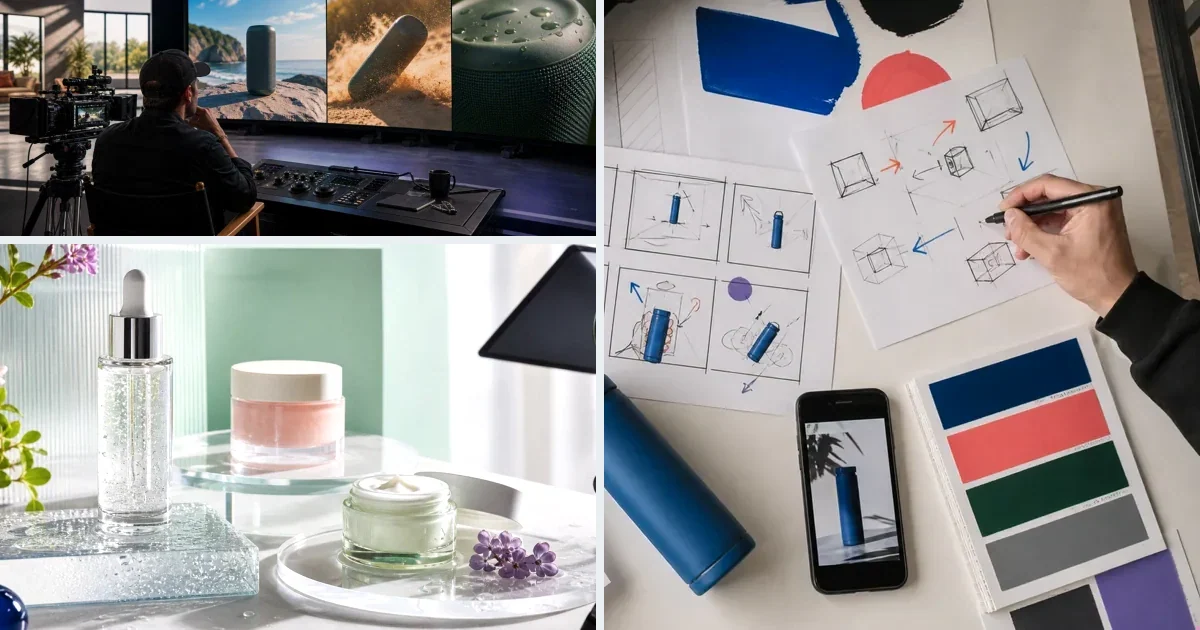
The stack's most practical pairing, not a rivalry. Seedance 2.0 is the volume default: clean product-forward output at ~$2.44 per 8-second clip, fast, reliable on structured briefs. Kling 3.0 is the fidelity tier: physically plausible motion, liquids and fabric, reflective surfaces, image-to-video that preserves detail, plus motion copy. The working pattern is sequential — explore ten angles on Seedance, then re-render the winner on Kling when the product's physicality is the pitch.
Head to head
| Seedance 2.0 | Kling 3.0 | |
|---|---|---|
| Job | Volume testing, product-forward scenes | Materials, motion, image-to-video |
| Cost per clip | ~$2.44 / 8s | Higher |
| Liquids/fabric/reflections | Adequate | Best in stack |
| Motion copy | — | Yes |
| Speed | Fast | Slower |
When to pick Seedance 2.0
Ten-variant test weeks, simple product-on-surface scenes, UGC bodies, any exploration phase where cost per attempt rules.
When to pick Kling 3.0
Beauty/food/apparel hero shots, jewelry light-play, replicating a winning motion across SKUs, the scaled render of a proven angle.
The honest answer for your product
Run the same brief on both — in v4v's Lab that's two generations on one balance, a few dollars total. Model debates end fast when your own product is the benchmark.
Paste a product link. The brief builds itself.
Generate product videos, UGC-style ads and hooks in about 5 minutes.
Try v4vFrom $7 · no subscription, ever · credits never expire
FAQs
Is Kling worth the extra cost?
When the product must be the visual hero, yes — fidelity shows in hook rate. For exploration, no; that's Seedance's job.
Do I need separate subscriptions?
No — every model here runs on the same pay-per-use credit balance.
Facts checked July 16, 2026. Competitor claims from public pricing pages; verify before relying on them.