Product changelog

AI Product Video & Workflow Updates — Latest Features & Improvements

New AI video models, Shopify tools, UGC ad workflows, and practical product improvements—documented as they ship.

Explore the latest updates
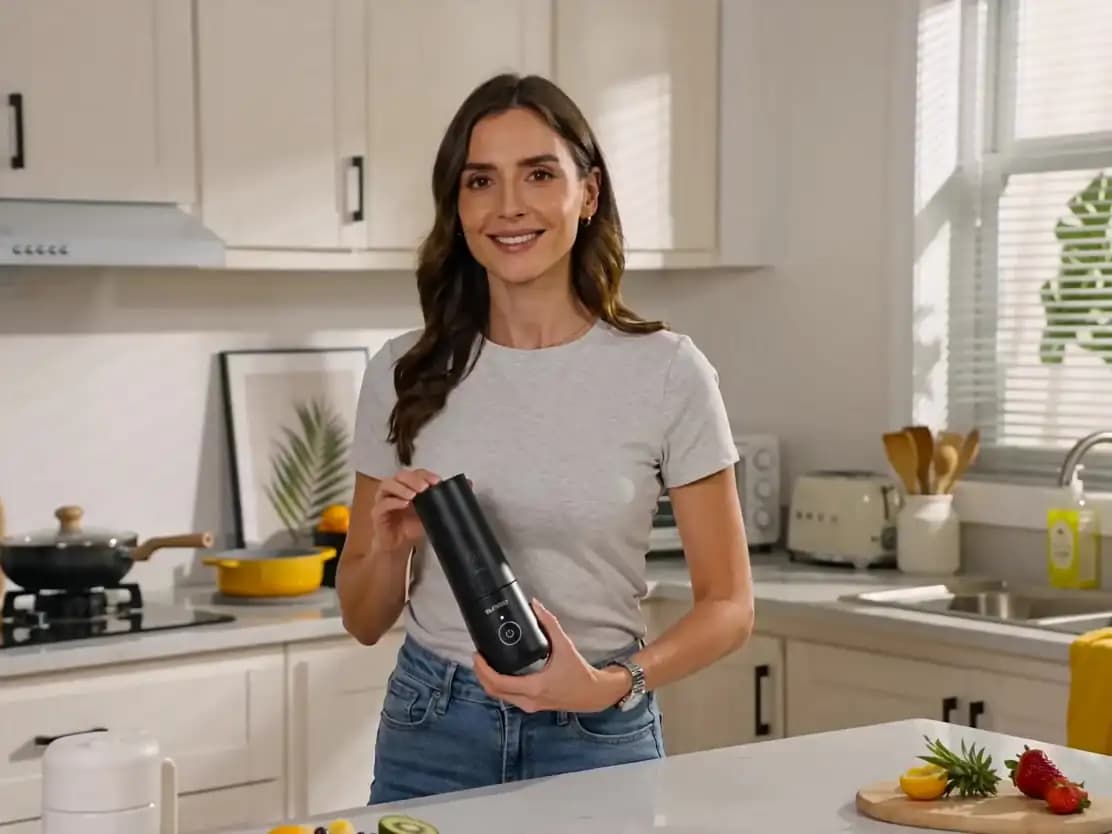
AI-generated product video presenter created with v4v.ai
Shipped weekly
Better ways to create product video
Latest releases

Built in public. Explained clearly.

Weekly notes for ecommerce teams and creators who want to know what they can make faster, control more precisely, or publish with fewer steps.

19

Creative Ideas, Batch Videos, and a Better Connected Studio

Start with an AI ad idea, create product videos in batches through API or MCP, and reuse more of your Studio library from an assistant.

Read full release note

This release brings a shorter path from a saved product to a creative direction, plus more control when you create several videos through an app or AI assistant.

  • Get an idea before you render. In Studio, choose Add product & inspire me, or select a saved product, to receive a short ad concept based on the product and your current settings. Insert it, try another idea, or remove the inserted suggestion while keeping your own brief. Suggestions do not start a video or deduct your video credits.
  • Explore jewelry and skincare prompts. The updated jewelry and beauty and skincare pages pair copyable prompts with video examples. Use the available Recreate links to bring an example into Studio. The Promptbook signup adds a confirmation step, PDF delivery, follow-up practice emails, and an unsubscribe option.
  • Create product videos in batches through API or MCP. Submit up to 300 products using saved product IDs, product-page URLs, or prepared details and images. Share a brief and settings across the batch, set a credit budget, and optionally begin with a five-item sample.
  • Keep the results you like. Pause or cancel future batch starts while admitted work finishes. When you request another attempt, retry failed items or rework only selected results with a revised brief. A full restart is also available. Earlier attempts and cumulative credit usage remain in the history; resuming a paused batch does not retry failures.
  • Prepare a generation with your assistant. MCP can now discover the current Studio styles, durations, aspect ratios, quality and voices, list your saved products and available avatars, and use their IDs directly. Saved styles carry their creative instructions into the video brief. Preview estimated credits before rendering, or request two or three Studio variants within a batch budget. The estimate does not reserve credits or create a render.
  • Understand a wait or failure. Excess single Lab and Studio API/MCP requests wait for an account slot without reserving credits yet. Failed tasks identify the stage, whether the brief finished, and actual credits used. A completed brief may retain its charge even if the video step fails; a retry hint does not create another paid attempt. Bulk eBay imports and saved image references also have improved handling.
  • Reuse and organize finished work. Generation results include project and reusable file IDs. Renew protected download links without rendering again, and rename a project from MCP to distinguish versions. Studio projects are listed consistently with the newest first and clearer category previews.
  • Follow batch progress during a conversation. The new MCP batch-wait tool waits for a meaningful update and tells the assistant to continue monitoring until completion or a pause that needs your decision. Bulk and variant requests also support signed webhooks to an external receiver. These webhooks do not restart an idle Claude browser conversation or guarantee a new chat message after the assistant has ended its turn.
  • Give administrators clearer controls. Assign access to individual admin modules from a focused permissions panel, recognize accounts with admin access, and inspect email-sequence status and delivery attempts. Examples administrators can also promote an owned project's saved result through MCP and choose its dashboard, Studio and landing-page visibility.

Open Studio · Read the MCP guide · Read the API guide

18

More Complete Product Imports from MightyMount

Bring in the product gallery, title and fuller details from MightyMount listings, then review the references before creating your video.

Product imports from MightyMount now use the listing's product gallery and product-specific details more reliably.

  • Bring in the product views. The importer reads gallery images, including images loaded through zoom and lazy-loading controls, rather than relying only on a page preview.
  • Keep more useful product detail. Product titles, description sections and expandable product information are included in the import, with more room for the description.
  • Review before you create. Check the imported name, description and selected images in Studio, adjust the facts or references, and then write your brief. Importing a listing does not start a video generation.

This update focuses on MightyMount listings; other stores continue to use their existing import handling.

Add a product in Studio

17

Clearer Credits, Smoother Studio, and Easier Shopify Access

Follow your balance as you create, recover from temporary status problems, and compare credit packs with clearer pricing guidance.

Read full release note

This week's improvements make it easier to understand what is happening while you create, manage your credits, and find the right way to use v4v.

  • See your balance change as you work. Credit totals in Lab, Studio and Workflows now follow actual generation charges and refunds, including concurrent runs, rather than waiting for a manual page refresh.
  • Recover the status of the same video. A temporary connection or status-check problem is shown separately from a confirmed generation failure. Use Check status to retrieve the existing run instead of starting another video. A connection error alone does not mean a generation failed or a refund was issued.
  • Keep useful download names. New product generations no longer inherit a previous product's video name. Download filenames follow the current project, and Lab downloads preserve the correct file extension.
  • Choose credits with more context. The pricing page explains workflow credits, compares the actual packs, and gives examples for smaller tests, campaigns and repeated product work. Referral rewards and one-time top-up credit expiry are explained alongside the existing offers. Generation costs vary with the model, settings and number of attempts; check the estimate before rendering.
  • Find the existing Shopify app faster. The Shopify guide now links directly to installation and explains the Shopify-admin workflow for previewing, approving and publishing videos to product media. The web product-URL workflow remains available too.
  • Browse clearer help on faster pages. Core pages have fuller FAQs, case-study content is accessible without JavaScript, and landing and mobile pricing pages have improvements to loading and layout stability. You can also opt in to pricing news from the public pricing page without creating an account.
  • Give AI tools a fuller reference. The expanded plain-text product guide brings product facts, format guidance and the existing prompt library together for assistants and integrations. Use it alongside the API and MCP guides.
  • Make import problems easier to investigate. Failed product-page imports now include better operational diagnostics so support can identify the affected store and failure stage.

Open Studio · Compare credit packs

16

Meet Astra, Create New Images, and Bring Your Products Along

Chat with GPT-6 Astra, try GPT Image 2.5, and start a product video from a listing or a single image link.

Read full release note

This week brings more ways to go from a product idea to something you can share.

  • Work through ideas with Astra. Open Chat in Lab to ask GPT-6 Astra for a script, explore an ad idea, or ask about an image. You can turn on web search when you need it. The response shows the credits used. Astra is also available in Workflows, so its text can feed the next step of your creative process.
  • Try GPT Image 2.5. Flare and Sunburst are available for creating and editing images. Choose a format, resolution, and background, including transparent backgrounds for product visuals. The new models also work in Character and Frame Grid tools.
  • Start with an image link. Paste a direct product image URL to add a product, then review its details before creating your video. A full store listing is no longer required.
  • Bring in more store listings. Product imports now handle eBay listings across more regional sites and show images more reliably from stores such as Buyaparcel.
  • Keep your chosen references. Studio handles selected product photos and avatar references more reliably, and Lab has improved completion handling for image generations.
  • Explore 20 real product videos. The new examples gallery pairs product photos with finished videos, from UGC and tutorials to cinematic ads. Watch without signing in and find a direction for your own product.
  • Catch up on the blog. Eight new posts cover product showcase videos, AI video templates, creative strategy for ecommerce brands, AI influencers, and tool pricing and alternatives. Browse all articles for the full collection.

Try Chat or Images in Lab

15

Topaz Upscaling, API Access, and MCP

Enlarge product images, create with v4v from your own apps, and connect a compatible AI assistant to your generation tools.

Read full release note

Give your product images more room to work, whether you are preparing an ad or building a repeatable creative workflow.

  • Enlarge images with Topaz. Find Topaz in Lab's Images section or add it to a workflow. Choose 2× or 4× enlargement and check the credit estimate before you generate.
  • Use v4v through the API. Create an API key in Profile → API Keys, then run Lab models and Studio workflows from your own app or automation. Your existing credits apply, and you can review usage or revoke a key in your profile. See the API guide.
  • Connect an AI assistant with MCP. The new MCP preview lets compatible assistants find v4v models, use reference images, start generations, and retrieve the results. Follow the MCP connection guide to connect with your API key.
  • Recover from temporary download problems. v4v now retries fetching a finished image or video when the download briefly fails, without starting another generation.
  • Understand reference-image errors. Studio and Lab give clearer feedback when a generation service rejects a reference image, so you know what to change.
  • Use your codes more easily. Bonus and coupon entry in Profile and Billing is clearer and easier to find.

Open Images in Lab

14

A Quick Guide to Your New Lab

A weekly walkthrough of the Lab introduced on September 4: choose a model, add references, check the cost, and reuse a previous run.

This week's note is a short guide to the Lab introduced last week. Here is a simple way to get started:

  1. Choose what you want to make. Pick an image or video tool, then select a model. Lab shows the controls supported by that model.
  2. Add your direction. Write a prompt and add reference images, a first frame, or a last frame where the model supports them.
  3. Check the cost. Adjust the available duration, format, and quality settings, then review the credit estimate beside Generate.
  4. Build on a previous result. Open Runs to revisit your work and reuse its settings for the next idea. Your drafts stay separate for each model.

Try changing one part of your prompt at a time to explore a different direction.

Open Lab

13

MiniMax H3 and the New v4v Lab

Three MiniMax H3 video workflows meet a redesigned Lab where prompts, references, model controls, live credit estimates, and run history stay in one focused workspace.

Read full release note
  • Added MiniMax H3 Text, Image, and Reference video workflows to Workflows and Lab, with 768p and 2K output, video and audio inputs, additional reference images, and model-aware credit estimates.
  • Cut MiniMax H3 prices in half: 768p dropped from 16 to 8 credits/sec, 2K from 26 to 13 credits/sec, and each additional reference image after the first five free images dropped from 8 to 4 credits. Generated and input video seconds use the selected resolution rate.
  • Rebuilt Lab around one cleaner composer. Prompt text, Reference Images, First Frame, Last Frame, and other model inputs now stay inside the main creation area, show their selected state, and reopen their full picker with one click.
  • Made controls truly model-aware: duration, aspect ratio, resolution, native audio, and advanced settings now use the options supported by the selected model. Clear, live model pricing, and the final Generate cost stay together in the composer footer.
  • Made model discovery faster by keeping current favorites visible and prioritizing MiniMax Text, MiniMax Image, Seedance 2.0, Kling 3.0 Motion, and Kling AI Avatar in More Models.
  • Lab now preserves per-model drafts and prompt history, keeps URL and browser navigation in sync, validates only the controls currently in use, and restores saved settings more reliably.
  • Expanded Runs so creators can open, reuse, retry, rename, delete, and load more generation history without leaving Lab.
  • Added live support chat, bonus and discount code entry, and clearer real-world video estimates across pricing and billing surfaces.
12

Gemini Omni Flash 1.1 Arrives in Studio and Lab

Lab and Studio now use the latest Gemini Omni Flash model with stronger reference controls and more dependable project recovery.

  • Added Gemini Omni Flash 1.1 to Workflows and Lab while keeping the previous Gemini Omni Vid model available.
  • Added first-frame and last-frame controls, product reference images, reusable character IDs, duration and resolution settings, and model-aware pricing.
  • Updated OmniVid and Studio to pass selected products and avatars correctly into new generations.
  • Fixed legacy OmniVid projects so saved avatars and products restore reliably, and added automatic recovery for temporary character-processing errors.
  • Kept prompts empty when the creator selects only product and avatar objects without writing any prompt text.
11

A More Focused Shopify Studio Experience

The embedded Shopify workspace is now cleaner and keeps attention on creating and publishing product videos.

  • Removed duplicate personal Studio account settings from the Shopify app.
  • Removed the redundant workspace settings section from the embedded experience.
  • Simplified the app surface so product selection, video creation, credits, billing, and publishing remain the primary actions.
10

Seedance 2.5 and a More Reliable Shopify Workflow

A new Seedance generation option joined v4v while Shopify creation, billing, and publishing became more dependable.

  • Added Seedance 2.5 to Workflows and Lab with familiar Seedance inputs, 480p and 720p output options, and video-aware credit estimates.
  • Completed Shopify credit-pack purchases, billing history, invoices, welcome credits, and generation status handling.
  • Improved the Shopify product-video action with steadier progress polling, clearer loading states, and safer publish lifecycle handling.
  • Restored product imagery on pricing pages and improved canonical public URLs across navigation and search surfaces.
09

Shopify AI Product Videos, Right Inside Your Store

Create, review, and publish product videos from Shopify without rebuilding your workflow in another tool.

  • Open the live v4v Studio from a Shopify product or from App Home.
  • Import product details and images with Shopify's product picker, then choose style, duration, format, language, voiceover, and presenter.
  • Generate with the active v4v video workflow, review the result, and add it to the Shopify product media gallery.
  • Disconnect or switch the connected v4v account without reinstalling the app.
08

New AI Video Guides, Comparisons, and Prompt Libraries

A larger learning library now helps ecommerce teams choose AI video models, formats, prompts, and platforms with less guesswork.

  • Added practical guides for AI product videos, UGC ads, creative testing, and reusable workflows.
  • Expanded model and tool comparisons so creators can match quality, speed, and control to the job.
  • Improved navigation, author context, social previews, and content indexes to make useful answers easier to find in search and AI assistants.
07

Flexible Plans and a Smarter First Run

New subscription options and clearer onboarding make it easier to start with the right amount of AI video capacity.

  • Added subscription plans alongside pay-as-you-go credits.
  • Introduced a short signup survey that helps tailor the first Studio experience to each creator's goals.
  • Expanded public case studies, including Ukrainian-language access, so more teams can see practical ecommerce video examples.
06

A Cleaner Studio, Faster Downloads, and Guest Preview

The core creation workspace became easier to explore, manage, and use from mobile devices.

  • Renamed and reorganized the main workspace as Studio, with clearer project and tool navigation.
  • Added guest preview so new creators can explore the AI video workflow before committing.
  • Improved mobile video downloads, preserved useful filenames, and made stalled workflow recovery more dependable.
  • Published a richer case studies experience with real ecommerce creative examples.
05

Smarter AI Video Workflows and Better Product Imports

Studio gained more useful controls for turning product pages, images, and creative direction into repeatable video workflows.

  • Improved prompt entry, image options, project filters, and reusable Studio tools.
  • Made product gallery imports more reliable across ecommerce storefronts.
  • Refined image handling for AI Film Director workflows and added referral bonuses for invited creators.
04

OmniVid: A New AI Product Video Workflow

OmniVid joined v4v Studio as a connected workflow for creating polished product motion from prompts and reference images.

  • Added OmniVid generation with product and character reference support.
  • Brought format, model, pricing, and output controls into the reusable workflow system.
  • Improved render stability and project output handling so longer AI video jobs finish more predictably.
03

New workflow tools, builders, login updates, and coupon support

In last updates we expanded the canvas with new video nodes, launched new builder flows, improved account access, and added coupon code support.

Read full release note

Several product updates have been shipped since the last update on March 12, 2026.

What’s new:

- Added Seedance 2.0 to the workflow canvas for new video generation flows.
- Added a dedicated Ad Videos Builder flow for faster ad creation workflows.

- Added a dedicated Shopify Builder flow for product-focused video ad generation.

- Added email-based registration and login support, so access is no longer limited to Telegram only.

- Added coupon code support.

- Added 4 new Wan 2.7 nodes to the workflow canvas:

- Wan-2-7-text

- Wan-2-7-img

- Wan-2-7-videoedit

- Wan-2-7-ref-to-vid

Workflow improvements:

- Wan-2-7-videoedit now shows both credits per second and total credits directly in node settings.
- When Wan-2-7-videoedit duration is set to 0, pricing now uses the source video length automatically.

- Input connections and node settings were improved for the new Wan 2.7 nodes.

02

New AI Models, Nodes & Editor Improvements

This update introduces several new AI models, new workflow nodes, and usability improvements to make building AI video pipelines in v4v.ai faster and more powerful.

Read full release note

New AI Models Added

We expanded the list of available AI models:

  • nano-banana-2
  • veo-3.1 ( image → video, text → video )
  • Kling-v3-0-motion
  • seedream-5.0-lite (image generation)

Nodes Updated

Several nodes now support the new image AI models via provider settings:

  • Image Editing
  • Text to Image
  • Character Generation
  • Frame Grid Generation

Users can now choose between multiple image AI providers directly in node settings.


New Nodes Added

veo-3-1-image

Generate video from images.

Features:

  • image → video generation
  • supports up to 14 input images

veo-3-1-text

Generate video directly from a text prompt.

Kling-v3-0-motion

New motion model for generating animated video from images by adapting same emotion and movings from source video.


Improvements

Auto-random seed for veo-3.1

The veo-3.1 nodes now include an automatic randomizer for the seed value, making it easier to generate unique results.

Node tooltips

Added tooltips for node setting options to help users understand parameters more easily. (Currently available for new nodes.)

Better node placement

When adding a new node to the canvas, it now appears in the center of the screen, so you no longer need to search for it.

Editor navigation improvement

The Exit button in the project canvas editor has been replaced with Back to Project for clearer navigation.

Telegram login messages improved

Improved communication messages in Telegram during login authorization to make the process clearer for users.


Fixes

Get Video Frame node

Improved performance — the node now processes frames faster and more reliably.


More improvements coming soon 🚀

01

Project Update — Major Editor & Workflow Improvements

This update focuses on improving the workflow editor, node behavior, and usability, along with new admin tools and content sections.

Read full release note

Improvements

Mobile UI fixes

Fixed layout issues where workflow cards and dashboard blocks overflowed the screen on mobile.

Variable helper in node inputs

Typing $ now shows a popup with available internal variables ($now, $today, $rnd, $rnd_hex, etc.).

Click to insert directly into the field, for example: {{$rnd_hex(32)}}

Canvas editor improvements

- Click → open add-node panel
- Click and hold → start connection line

  • Added copy/paste for multiple selected nodes.
  • Improved + behavior on node outputs:

Smarter node auto-connections

New nodes added from + now automatically connect to the correct input port
(audio → audio, clip → clip, etc.).

Navbar shortcut

Clicking the username + credits block now opens the Profile page.

Dashboard improvement

Added a link to ready workflow templates on the Explorer page.


New Features

Frame Grid Generation — Prompt Gallery

  • Added gallery with example prompts and demo images.
  • Users can insert prompts directly from the gallery.
  • Admin interface added to manage gallery items.

Render node watermark

New optional input: image watermark

Watermark position settings:

  • top-left
  • top-right
  • bottom-left
  • bottom-right

New node: Get Video Frame

Extract an image frame from a video clip.

Options:

  • first frame
  • last frame
  • specific frame number

Fixes

Node error handling

Fixed issue where nodes kept spinning after errors or when credits ran out.


New Content Sections

How to Use

  • Tutorial posts with images, videos, and workflow links.
  • Admin interface added for managing guides.

Project Updates

  • Dedicated section for publishing feature updates and release notes.
  • Admin interface added.

Both sections are accessible from the footer.

Ready to make the next one?

Turn a product into publish-ready video.

Open v4v Studio