
Studio benchmark: 198 credits per 10-second video, at 720p or 1080p, in 9:16 or 16:9. About $1.39 on the $7 pack or $1.19 on the $300 pack. Lab models and Workflows vary; check the estimate before you run.
TL;DR — updated August 23 2026 Kling 3.0 is Kuaishou's latest video generation model, and it has meaningfully shifted what's possible for product video ads without a film crew. The model outputs 1080p footage with noticeably sharper motion consistency than its predecessors — enough to make it a real option for DTC brands running paid social. This guide covers what Kling 3.0 actually does well, where it breaks down, and how to fit it into a production pipeline that outputs ready-to-run 9:16 ads at scale. The number to hold in mind: a 10-second Studio video through an AI pipeline costs roughly $1.39. That changes how many creative iterations you can afford to test.
What Kling 3.0 Actually Does
Kling 3.0 is a text-to-video and image-to-video model built by Kuaishou. Version 3.0 brought three meaningful upgrades over prior releases: better motion coherence across longer clips, stronger subject consistency when the same product appears across multiple frames, and tighter prompt adherence for object behavior.
For product video ads, subject consistency is the critical one. Earlier AI video models struggled to keep a product looking identical across a five-second clip — a bottle would shift shape mid-motion, a shoe would lose sole detail between frames. Kling 3.0 handles this substantially better. That improvement is what makes it usable for commercial creative rather than just generative art. These Kling 3.0 prompts give you concrete material and motion descriptions to try.
The model supports clips up to roughly two minutes, but for paid social the relevant range is 6–15 seconds. That is where Kling 3.0 earns its place in a production pipeline.
Where Kling 3.0 Fits in a Product Ad Pipeline
Kling 3.0 is a generation layer, not a complete ad production tool. You still need to solve for:
- Hook framing — the first two seconds that determine whether the viewer stays
- Text overlays and captions — required for most feed placements where audio is off by default
- Format sizing — 9:16 for TikTok, Reels, and Stories; 1:1 for feed; 4:5 for Meta
- Brand consistency — logo placement, color grading, end card
This is the gap a purpose-built AI ad platform fills. v4v.ai uses models including Kling 3.0 to generate the video layer, then wraps it in a production pipeline that handles format, captions, and hook structure automatically. A product URL goes in; a directed 9:16 ad comes out. You can see how that works at v4v.ai.
Running Kling 3.0 raw through an API and assembling the rest yourself means two to four hours of post-production per video. That kills the economics. The model is fast. The assembly is not.
What Kling 3.0 Does Well for Product Ads
Motion-first product reveals
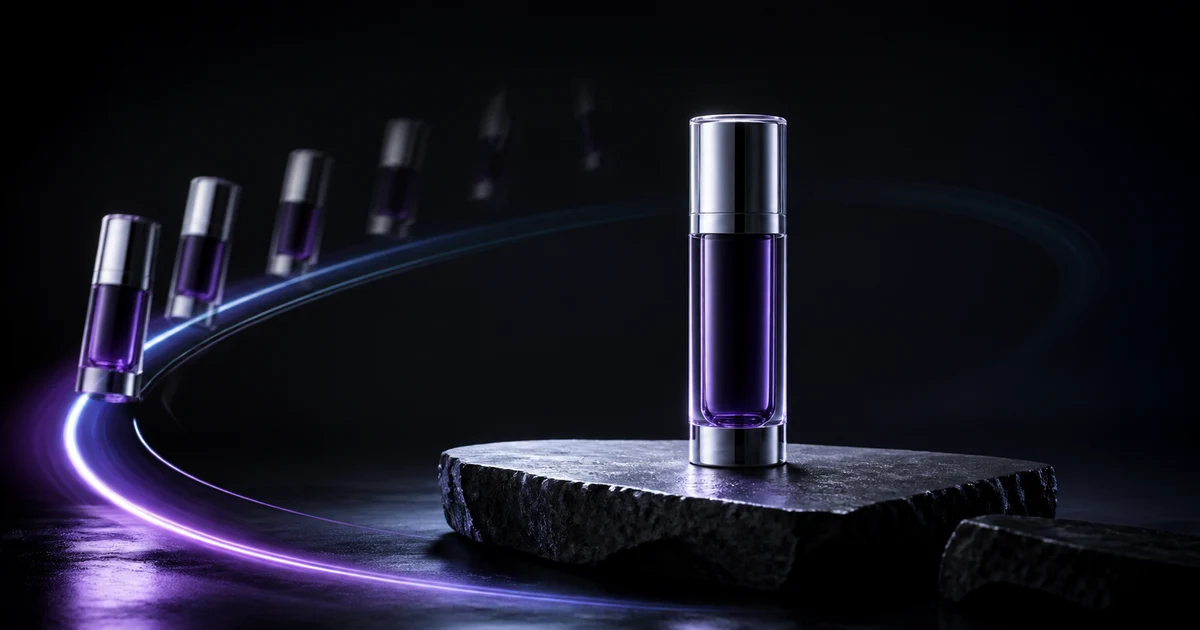
The strongest use case is a product reveal with controlled motion — a perfume bottle rotating, a skincare product being applied, a sneaker dropping into frame. Kling 3.0 handles physics-adjacent motion well. The product stays recognizable. The motion reads as intentional rather than glitchy.
This maps directly to a strong paid-social pattern: show the product and the action early, so viewers understand the offer before they scroll away.
Image-to-video from a product photo
You do not need a video shoot to start. Kling 3.0's image-to-video mode takes a single product photo and animates it into a short clip. For brands with a Shopify catalog, every existing product image becomes a potential video asset.
In a merchant test shared on r/ecommerce in July 2026, product pages with 8–10 second demo videos converted roughly 12% higher than static image pages — one store's result, not an industry study, but consistent with what most DTC operators are observing.
Batch generation for creative testing
Kling 3.0 generates quickly enough to support real creative testing. You can produce ten variants of a product reveal — different motion styles, different camera angles, different lighting moods — and let performance data decide which one scales. That is the correct way to use AI video: not to produce one polished ad, but to produce enough variants that you are testing a hypothesis rather than guessing.
The AI Product Video Ads complete guide for e-commerce covers the testing framework in more detail.
Where Kling 3.0 Falls Short
Text rendering inside video
Like most video generation models, Kling 3.0 does not reliably render legible text within generated footage. Price callouts, product names, CTAs embedded in the video itself — all of these need to be added in post. That is standard practice, but it is a step raw Kling 3.0 access does not solve for you.
Complex multi-product scenes
Scenes with two or more products interacting tend to produce inconsistencies. One product will drift in size relative to the other. For single-hero-product ads this is irrelevant, but for brands showing a bundle or a comparison, Kling 3.0 is not yet reliable enough without significant iteration.
Photorealistic human talent
If your concept requires a person using the product, Kling 3.0's human motion is plausible but not convincing enough to pass as genuine UGC. For that use case, avatar-based tools or actual UGC remain stronger options. The 10 types of product video ads that convert on paid social breaks down which formats benefit from AI generation versus which still need human talent.
Prompting Kling 3.0 for Product Ads
The model responds to specific, physical descriptions. Vague prompts produce vague results.
What works: - Name the product material and surface: "matte black aluminum water bottle on a white marble surface" - Specify the motion type: "slow 180-degree rotation," "gentle pour," "product slides into frame from left" - Set the lighting: "soft studio lighting, single key light from upper left" - Define camera behavior: "static camera, no zoom, shallow depth of field"
What does not work: - Emotional or abstract prompts: "luxurious," "energetic," "premium feel" - Brand value instructions: the model has no brand context - Asking for text in the video: unreliable — handle in post
Image-to-video mode is more predictable than text-to-video for product work because you control the starting frame. Use your best product photo as the input, then prompt only the motion layer.
Commercial production rewards controllable output more than unconstrained range. Kling 3.0's prompt-adherence improvements are a direct step in that direction.
Kling 3.0 in a Real Production Stack
A practical stack for a DTC brand running paid social in 2026:
- Product photo — existing catalog image or a clean studio shot
- Kling 3.0 image-to-video — generates the motion layer, 6–10 seconds
- AI ad platform — adds hook text, captions, format sizing, end card
- Creative testing — five to ten variants per product; let CPM and hook rate decide the winner
- Iteration — the winning motion style becomes the template for the next batch
Step three is where most of the production value comes from. The video generation is raw material; the platform is what makes it a runnable ad. v4v.ai handles steps two through four in a single pipeline, which is why the per-video cost stays around $1.39 for a 10-second Studio output. Credits never expire and there are no subscriptions — you buy a credit pack starting from $7 for 1,000 credits and use it at whatever pace your testing cadence requires.
For brands that want to see what AI-generated product ad campaigns produce at scale, the 5 AI product video ad campaigns that drove real results in 2026 covers specific examples with format and performance context.
As short-form video demand grows, brands with reusable AI production pipelines can increase creative volume without increasing production cost at the same rate.
The v4v Shopify App
For Shopify merchants, v4v is building a direct integration that generates and attaches product videos from within the Shopify admin — no export, no upload, no manual attachment. Coming soon. Join the waitlist at v4v.ai/contacts.
In the meantime, the fastest path is the product-link-to-video flow: paste your product URL, and the pipeline pulls the images, generates the video, and returns a formatted ad ready to run. Turn your product page into a video in under 5 minutes →
The One Rule That Governs All of This
The model is not the bottleneck. Assembly is. Kling 3.0 can generate a usable product motion clip in under a minute. What takes time is everything that turns that clip into a runnable ad: the hook, the caption, the format, the end card. Build or use a pipeline that handles assembly automatically, and the per-video cost stays low enough to test at the volume that actually produces signal.
Paste a product link. The brief builds itself.
Generate product videos, UGC-style ads and hooks in about 5 minutes.
From $7 · no subscription, ever · credits never expire
FAQs
What is Kling 3.0 and how does it differ from earlier versions?
Kling 3.0 is Kuaishou's third-generation video model. The main improvements over version 2.x are better subject consistency across frames, stronger prompt adherence for object behavior, and improved motion coherence in clips up to two minutes. For product video ads, subject consistency is the most commercially relevant upgrade.
Can I use Kling 3.0 to make product ads without a camera or film crew?
Yes. The image-to-video mode takes a single product photo and animates it into a short clip. No film crew required. You will still need a post-production layer for captions, text overlays, and format sizing before the output is ready to run as a paid social ad.
What prompts work best for product video generation in Kling 3.0?
Specific, physical descriptions of the product, surface, lighting, and camera motion produce the most consistent results. Avoid abstract or emotional language. For product work, image-to-video mode is more predictable than text-to-video because you control the starting frame.
How much does it cost to produce a product video ad using an AI pipeline with Kling 3.0?
Through v4v.ai's credit-pack system, a 10-second Studio video costs approximately $1.39. Credit packs start from $7 for 1,000 credits, and credits never expire — no subscriptions. Check current pack options at v4v.ai.
Where does Kling 3.0 fall short for product ads?
The model does not reliably render legible text inside generated footage, struggles with multi-product scenes, and is not yet convincing enough for photorealistic human talent. Single-hero-product motion reveals are its strongest use case for paid social.